

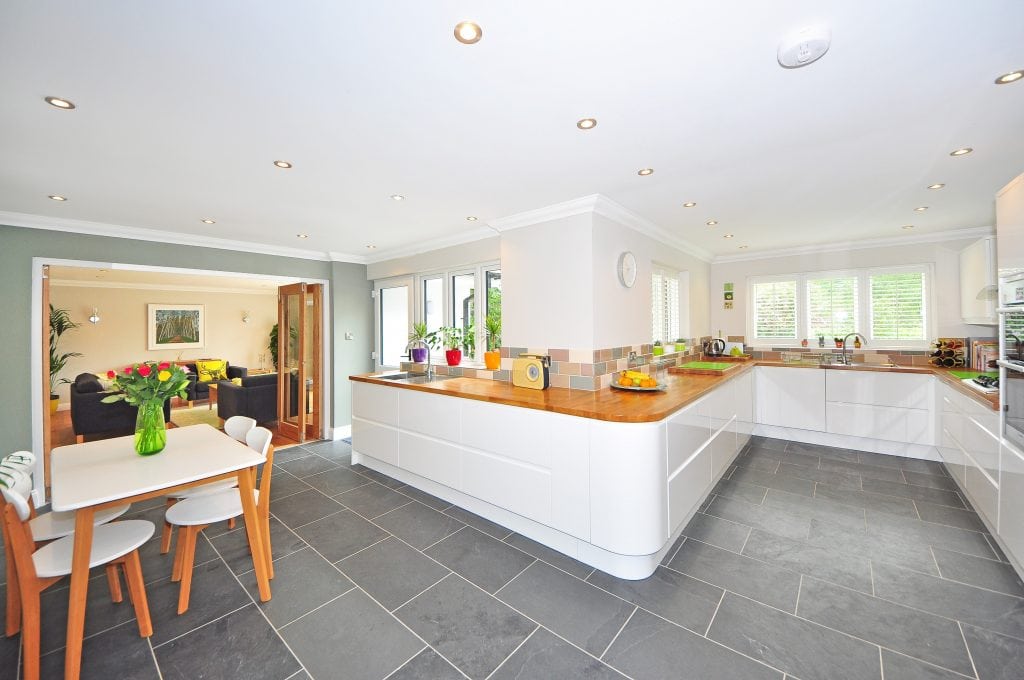
Kitchens are made up of a wide variety of different parts, and the prices of these parts can vary greatly from one range to the next. The total cost of renovating an entire kitchen can range widely from project to project. How much does it cost to renovate a kitchen is typically the first question that comes to the minds of many individuals who have never taken on a home improvement project before.
Before you can truly begin planning and making progress, you need an answer to this question, as it is both logical and important, and it must be answered before you can move forwards.
At Hitch Property Constructions, we have an extensive range of kitchen renovation Melbourne to take the hassle out of deciding the right furniture that matches.
Kitchen is expensive to renovate
The kitchen is the room in the home that is remodelled the most frequently and is also the room that costs the most money.
The Housing Industry Association (HIA) estimates that there will be approximately 149,352 jobs related to kitchen renovations taking place in Australia in 2018–19, and that the average cost of a kitchen installed as part of a renovation will be $26,280.
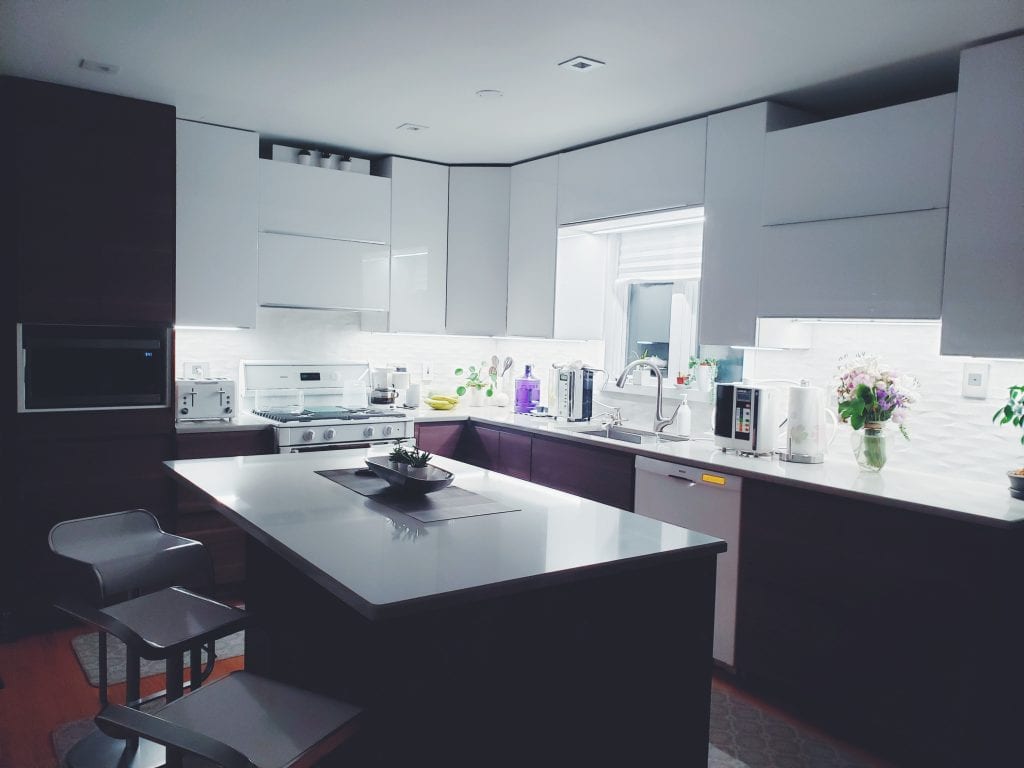
The cost of kitchen renovations depends on the size, quality of materials, and layout.
Budget renovations may include cheaper materials and appliances; mid-range renovations may include higher-grade tiling and granite benchtops; and luxury renovations may include a new floorplan, expensive European appliances, and high-end fittings.
How much you spend on a kitchen remodel depends on your budget, location, desired design, and home value.
To avoid overcapitalizing, spend 5-10% of your property's value on the renovation.
New kitchen cabinetry and hardware will eat up the most of your renovation budget, followed by labour and installation, appliances, ventilation, and benchtops. Flooring, lighting, doors, windows, walls, ceilings, and plumbing are also costs.
Kitchen renovation mistakes costs more money
Poor kitchen design
When planning your kitchen's layout, it's crucial to prioritise both practicality and aesthetics. If you don't, you might end up with a kitchen that looks great but isn't very functional.
Think about the people who will be using the kitchen when designing it.
An accessible kitchen is helpful for families with young children or teenagers, those with physical limitations, and the elderly. The kitchen layout should take into account people of varying heights and physical abilities.
The "kitchen work triangle" is a simple, well-established principle for designing efficient, ergonomic kitchens. The stove/oven, the sink (where food is washed and prepared), and the fridge should form a triangle.
This time-honored kitchen layout is adapting to meet our evolving needs. Even though the kitchen triangle is still an important design element, its significance has decreased. For example, if cooks want to use their phones to look up a recipe, they'll need access to electricity and a safe area where the device won't be damaged by the stove or the sink.
DIY overwhelm
It is possible to undertake a kitchen renovation on your own, particularly if you are only planning on making cosmetic changes, such as updating the tiles and grout, painting, and installing new cabinets.
It will save you a lot of money if you can handle the kitchen remodel by yourself. It is dependent upon your availability, ability to think creatively and methodically, and financial constraints. If you don't have the knowledge, time, or materials, you'll probably end up hiring professionals to help you out, which will blow your budget.
On the other hand, there are some things you simply cannot or should not do. A licenced plumber or electrician should be called in to instal the sink, dishwasher, plumbing, electrical work, and gas fitting.
Problems with do-it-yourself projects extend beyond a lack of expertise to concerns over security, compliance with building codes, and adherence to Australian standards.
If something goes wrong, you'll be protected if you hire professionals who are registered, licensed, and insured, but you'll be on the hook if you try to handle it yourself.
Looking for kitchen renovation Melbourne? Look no further? Hitch Property Constructions has you covered.
Prioritising style over function
It's important that potential buyers like the look of your remodelled kitchen. It needs practical components to be both useful and appealing.
Lighting, ventilation, storage, bench space, long-lasting materials, and space are all important factors to think about when designing a kitchen.
To get the most out of your kitchen remodel, go with classic materials and hues.
A kitchen design expert, builder, or project manager can help you figure out the best way to do this in light of your home's aesthetic and your family's needs.
Style is a matter of individual preference, and functionality can be a design goal. Don't put the latest fads ahead of what feels right for you now. Natural marble benches won't be stain-proof enough for families with young children.
Making changes after work begins
It's important that you approve of the kitchen layout before construction begins to avoid having to make costly adjustments later on. It's crucial to keep an open line of communication with the construction crew.
Picking the right function Object() { [native code] } and keeping lines of communication open and honest are crucial to a project's success. Contractor-client dialogue regarding aesthetic preferences yields the best results. Tell your builder exactly what you can afford to spend, as well as what you don't like about your current kitchen, the alterations you want, and the style you're going for. If you go into things knowing as much as possible, they will help you get the most out of your efforts.
Make sure your designer and builder/project manager have the exact measurements of your new or pre-owned appliances to ensure a seamless integration into the renovated space. If not, a kitchen remodel could end up being a necessary and expensive expense.
Check out our range of kitchen renovation at Hitch Property Constructions.
Going it alone on a flat-pack kitchen
In some cases, a flat-pack kitchen is the best option. Prefab kitchens and their various parts, such as cabinets, drawers, and drawer slides, can be purchased on a budget or in a higher quality.
Many are available in both standard and custom sizes, and many different designs are available. Putting them in is a job for a handyman, kitchen installer, or carpenter, but if you're up to it, you can do it yourself.
Other crucial components of a kitchen remodel include the benchtops, splashback tiles, and flooring. Additional fees and technical expertise may be needed for installation.
Don't try to do this on your own without some sort of expert assistance unless you're positive in your abilities to succeed. Otherwise, you may need to hire a professional and shell out the cash to get the work done quickly.
What should you think about before you start a full kitchen renovation?
It's important to take stock of your available space before you start planning out the finer details, such as fixtures and tiles.
- So, what exactly are your needs for this room?
- Your input on the form and operation is welcome.
- Is the proportion and layout appropriate?
Budget and resale value.
Consider these three things as you set your budget. Remember to factor in the home's resale value if you intend to sell it.
For a full kitchen remodel to return your investment or break even when you sell your home, budget between 3 and 8 percent of the home's value.
Spending $33,000 to $88,000 on a kitchen remodel in Sydney, where the average home costs $1.1 million, will not reduce the home's resale value.
Help – I don’t have a budget that size!
You can still give your kitchen a facelift without spending that much money, though:
- The cabinets should be refinished or refaced instead of being replaced.
- If your appliances are old and could use a stainless steel finish, consider giving them a facelift.
- It's better to replace things gradually than all at once.
The design and layout process.
Changing the layout significantly will require at least $30,000 in preliminary construction costs.
This is because submitting a permit application with your local council will necessitate working with a licenced architect to prove that your proposed renovations will adhere to all relevant regulations and statutes.
Altering the current framework and footprint will add ten to fifteen percent to the total cost of the project in the form of labour and materials costs, as well as fees for design and permit filing. The monetary repercussions are also known as costs.
Key considerations for the layout of your kitchen.
Although the shape and size of your kitchen will largely dictate the layout you choose, it is still a good idea to keep the traditional "working triangle" in mind as you plan out the design of your new space. This triangle includes the kitchen, the pantry, and the dining room.
The goal of this concept is to minimise the time and effort spent getting from the sink to the fridge to the oven by placing each appliance at a different point of the triangle.
The kitchen work triangle can be adapted to fit most layouts; however, if you have to place the range, dishwasher, and sink along a single wall, you will need to "flatten" the triangle. Putting the three points on a straight line with no more than a few steps between them will accomplish this.
Cabinetry costs.
It's no surprise that new cabinets account for roughly 30 percent of the total cost, given how much they can alter the feel and look of a kitchen. Commonly found in hardware and home improvement stores, stock cabinets can be purchased right away for anywhere from $80 to $400.
Semi-stock cabinets, such as those sold at IKEA and Bunnings and that can be custom ordered from a company's inventory, are of higher quality and, as a result, more expensive, costing anywhere from about $150 to $1,000 per cabinet.
You can expect to spend between $500 and $1,500 on each custom-built cabinet if that's what you want.
Benchtop costs.
Benchtops will usually cost about 10% of the total budget, though this can vary widely depending on the material you choose and the size of your kitchen. Countertop materials vary widely in price per square meter, with the final price determined by factors such as the edge style and thickness chosen.
An inexpensive counter material is usually chosen by interior designers for long stretches of counter space, while more expensive materials are reserved for the central island.
Final touches.
The real style starts to emerge in the form of finishing touches after all the major components have been installed. Since appliances are so influential in the design of a space, it's recommended to set aside between $1,000 and $5,000 for them.
Choosing a tile backsplash is the most fun part of designing, and there are practically infinite options to pick from. Recessed lights in the kitchen can be installed for around $150 each, and pendant lights for above the island can be purchased for as little as $150. Food mixers are the final item to think about, with prices ranging from $250 to $1,000.
How much does labour cost?
The price of labour should be considered even if you're only updating a few kitchen fixtures (demolition, disposal and installation).
Planning ahead is crucial in case of any unanticipated costs. For instance, if you take the tiles off the walls, you might discover that the drywall behind them needs to be patched. If this is the case, you can expect to pay around $2,000 for floor stripping and replacement.
There are also the costs of floor protection preparation (approximately $600 to $900), waterproofing (approximately $1,000), electrical and plumbing system permits (approximately $900 to $2,000), and plumbing system work (approximately $2,000 to $3,500).
Getting More Luxury for Less
As mentioned above, average costs can be misleading. One budget renovation can cost under $10,000 while another can cost $25,000 or more. If you want a luxury kitchen at a budget price, there are a number of things you can do to save on costs:
- Select a flat-pack kitchen and complete some of the installation yourself.
- To save money on plumbing and electrical installation, leave your sink and electrical outlets in their current location.
- Instead of spending money on expensive wall tiles, opt for stylish acrylic splashbacks.
- Instead of ceramic or porcelain tiles, use vinyl flooring.
- If some of your existing appliances are still in good condition, keep them.
- IKEA offers stylish flat pack kitchens for less than $3,000. It may cost $1,000 to $2,000 more to remove your old kitchen and hire a kitchen installer to assist you. If you add $40 to $60 per square metre for vinyl flooring, you can have a budget kitchen renovation for around $6,000 to $8,000. A larger kitchen will cost more, but even with appliances included, the total cost can be much less than the "average" of $22,000.
Don't let the statistics of the averages frighten you. If you make smart choices, you don't need to spend more money to get quality and style. If you find yourself in need of assistance, kitchen designers are qualified to present you with all of your available options, not just the most costly ones. You can have the kitchen remodel of your dreams if you get quotes, compare them based on price and quality, and choose the best option.
Renovating a kitchen can be done on a budget, using luxury materials, or going all out with "ultimate" features. The cost of "budget" renovations begins at $22,000, while the cost of "ultimate" renovations begins at $40,000 and goes up from there. Appliances, plumbing and electrical work, as well as installation, will all have an impact on the final price.
Conclusion
Can you give me an estimate for a kitchen remodel? It all comes down to how much money you have, where you live, what kind of kitchen you want, and the value of your home when you're done. Spend no more than 10 percent of your home's value on the makeover to avoid overcapitalizing. DIY kitchen makeovers are doable. You will likely have to bring in experts to help if you lack the necessary expertise, time, or resources.
There are some things that you should not or cannot do on your own, such as putting in a sink and dishwasher. Communicate your budget constraints and your displeasure with your current kitchen's design to your builder. Spending between 3 and 8 percent of the home's value on a kitchen remodel will yield a return on investment or at least allow you to break even when you resell the house. The price of a new kitchen can vary widely depending on factors like its size and design. About 30% of the total is attributable to the price of new cabinets.
Prices include not only labour and materials, but also design and permit fees. Although the cost of countertops can vary widely depending on the material you select, you can expect them to account for about 10% of the total budget on average. Budget between $1,000 and $5,000 for appliances because of how much of an impact they will have on the overall look of the room. Remodeling your kitchen can be done on the cheap, with high-end materials, or with "ultimate" gadgets. The total cost will be affected by the cost of appliances, plumbing, electrical work, and installation. Gather bids, compare quality and cost, and make your decision.
Content Summary
- The kitchen is the room in the home that is remodelled the most frequently and is also the room that costs the most money.
- How much you spend on a kitchen remodel depends on your budget, location, desired design, and home value.
- It will save you a lot of money if you can handle the kitchen remodel by yourself.
- Prioritising style over functionIt's important that potential buyers like the look of your remodelled kitchen.
- To get the most out of your kitchen remodel, go with classic materials and hues.
- Don't put the latest fads ahead of what feels right for you now.
- Make sure your designer and builder/project manager have the exact measurements of your new or pre-owned appliances to ensure a seamless integration into the renovated space.
- Other crucial components of a kitchen remodel include the benchtops, splashback tiles, and flooring.
- What should you think about before you start a full kitchen renovation?It's important to take stock of your available space before you start planning out the finer details, such as fixtures and tiles.
- Consider these three things as you set your budget.
- You can still give your kitchen a facelift without spending that much money, though:The cabinets should be refinished or refaced instead of being replaced.
- The design and layout process.
- Key considerations for the layout of your kitchen.
- Although the shape and size of your kitchen will largely dictate the layout you choose, it is still a good idea to keep the traditional "working triangle" in mind as you plan out the design of your new space.
- Cabinetry costs.
- Benchtops will usually cost about 10% of the total budget, though this can vary widely depending on the material you choose and the size of your kitchen.
- Final touches.
- The real style starts to emerge in the form of finishing touches after all the major components have been installed.
- If you want a luxury kitchen at a budget price, there are a number of things you can do to save on costs:
- Select a flat-pack kitchen and complete some of the installation yourself.
- To save money on plumbing and electrical installation, leave your sink and electrical outlets in their current location.
- If some of your existing appliances are still in good condition, keep them.
- IKEA offers stylish flat pack kitchens for less than $3,000.
- If you make smart choices, you don't need to spend more money to get quality and style.
- You can have the kitchen remodel of your dreams if you get quotes, compare them based on price and quality, and choose the best option.
- Renovating a kitchen can be done on a budget, using luxury materials, or going all out with "ultimate" features.
FAQs About kitchen renovation
A good quality kitchen should last well over 20 years, giving it the longevity that allows you to enjoy how your kitchen looks without having to worry about wear and tear. The Kitchen Warehouse team have been to many people's homes to design them a new kitchen or check the measurements of their kitchen plans.
Colours such as creams and beiges can make a kitchen look elegant and expensive. If your kitchen is modern, you can use dark colours, such as blacks and greys, which can make it look lavish and extravagant. White reflects light and makes the space look bigger, so complement white with some wood and metallic highlights.
The total average cost of installing cabinets is $5,050, while installing countertops costs $3,300. The material is the greatest cost factor, averaging less than $1,200 for laminate countertops and less than $3,250 for solid surfaces.
"Kitchens and baths are by far the most expensive rooms in the house because they are not only finish- and material-intensive (full of countertops, tile, and cabinets), but also carry additional budgetary demands due to plumbing, electric, and mechanical requirements,"
Yes, Ikea kitchens are good. I believe that Ikea kitchen are a great product for the price. Of course, custom cabinetry is better. But if your budget does not allow for a completely custom, locally built kitchen then I believe that an Ikea kitchen remodel is an excellent second choice.
