

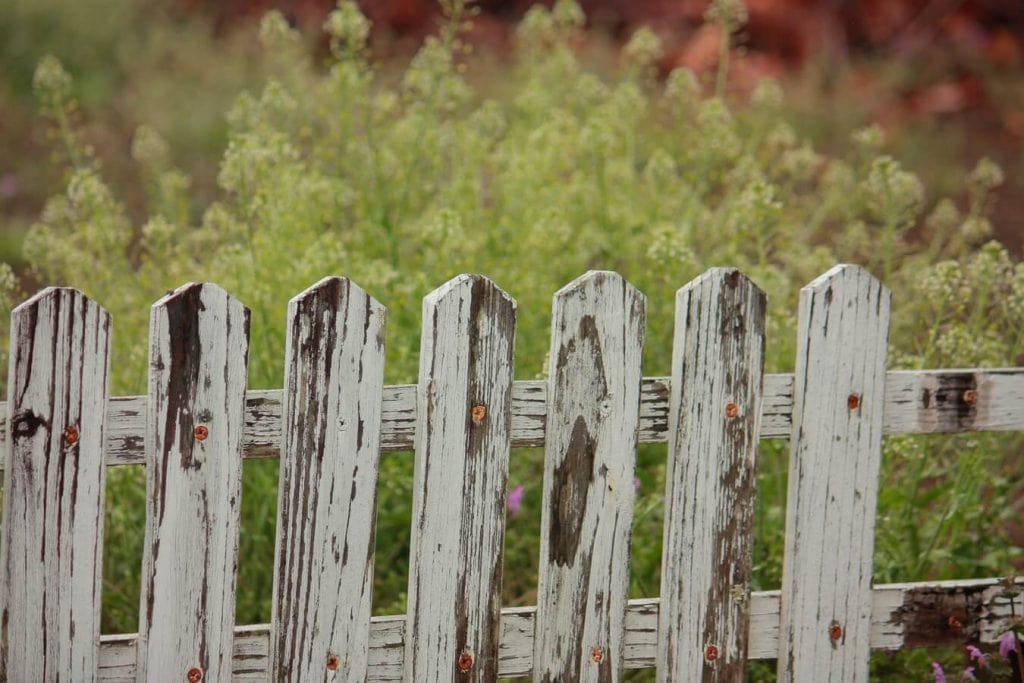
Depending on the size and materials you pick, the cost of fencing in your yard or garden can go up or down. Due to the immovability of the area's dimensions, little fencing expenditures are warranted. Buying cheap fencing may save money initially, but it may cost you more in the long run.
The fence you select will have an effect on the kerb appeal and security of your home. The visual appeal of a house could be greatly improved by a professionally constructed fence. Fencing, whether it be wood, chain link, or wrought iron, can completely transform the look and feel of a property. Examine your options for a cheap fence to use in your yard.
The charging bull statue in New York City is enclosed by a wrought-iron fence, which was built in 1771. In addition, you should see the Great Wall of China, which has been around for around 300 years.
Hitch Property Constructions has a wide range of Melbourne fencing services.
Your new fence shouldn't have to last forever, but it should at least last seven to twenty years. Something practical and aesthetically pleasing would be ideal.
You're thinking about enclosing your property with a fence, but you're overwhelmed by the options.
To aid you, we have compiled a list of nine different types of fence that could work for you. Find out more about your options, such as layout and material, in the following paragraphs so you can make a well-informed choice.
9 Types of Fences
Aluminum Fencing
In terms of cost and visual appeal, aluminium fencing is hard to beat. It's not as secure as some people would want, but it's easy to maintain and can be made to resemble the other fencing types we've talked about.
The only time maintenance is required is during assembly, when you're deciding whether or not to add finishing touches like paint and decorations. However, it's not as secure as you might hope.
Wood Fencing
In the United States, wooden fences are extremely common. Wood fencing is one of the various fencing options available, and it is also one of the most popular. It's inexpensive while still giving you the impression of visiting a friend's or family member's house. The price ranges from person to person based on their height. The rising demand for lumber means that its price will rise. Installing one of them takes time, just like erecting any fence. A smaller fence will naturally be cheaper to construct. Try out our Melbourne fencing services and see what we can achieve for you.
Wooden fences are the most long-lasting option, with some even lasting longer than the average home. The type of wood you use for your fence, like the type of wood you use for your floors, will have a significant impact on the final product's quality. You have plenty of leeway in making decisions.
PVC Fencing
To keep your children and pets safe, a PVC fence is the simplest and cheapest way to enclose your yard. These fences' pickets and posts are made of polyvinyl chloride (PVC), a material that is not as sturdy as wood but can nonetheless do the job. PVC sleeves, which are fitted over wooden posts to boost durability and stability while minimising the overall cost of materials, are used to construct the fence's posts.
To secure the PVC stakes to the crossbars, they are either glued or screwed in place. This style of fencing may be made to any desired height and features a wide range of vibrant colour options. This fence will last for decades thanks to the PVC materials used in its construction.
Wrought Iron Fencing
Wrought iron fences are a popular choice for the top of boundary walls on newer homes since they are both aesthetically pleasing and long-lasting, helping to make the property stand out from the rest of the neighbourhood. Iron fences stay for a long time and look great, but they need to be maintained regularly. Sanding and repainting wrought iron fences every two to three years is recommended to preserve their aesthetic value.
To circle back around to the topic of safety once more, wrought iron fences aren't the go-to option for homeowners looking for a traditional aesthetic. Wrought iron fences are more costly because they are custom-made to order.
Vinyl Fencing
Except for the price, vinyl fencing is now the greatest fencing material on the market. Some vinyl fence manufacturers claim their wares are four times more flexible and nearly five times stronger than comparable timber fences, according to research collated by our partners at HomeAdvisor.
Vinyl fencing doesn't need to be sprayed and doesn't absorb paint, so it's easy to clear off graffiti and paint overspray. A quick rinse under the hose with some soapy water will have it looking as good as new.
Vinyl fencing may have a higher initial cost for installation, but its low maintenance requirements and long lifespan make it a better value in the long run.
Chain Link Fencing
However, chain link fences excel at two of the most important fence functions—containing pets and preventing trespassers. The fact that they are inexpensive, long-lasting, and require almost any upkeep is probably music to the ears of homeowners and, maybe even more importantly, school administrators.
Plants, flowers, vines, and even privacy slates are common ways in which homeowners decorate their chain link fences. Not that it will make your house any less vulnerable, but at least you'll have more room to relax. A little thinking and planning on the part of any homeowner will allow them to successfully hide their property from their neighbours.
Electric Fencing
Create an invisible electric field around the yard's border to keep dogs in or out. The wire for a fence is typically laid in a trench that runs parallel to the boundary it is supposed to enclose. A wireless transmitter is also installed nearby to activate the wires.
The final component of the fencing system is a battery-operated collar designed to pick up the signal from the wire. A sound that only the animal can hear is produced by the collar whenever it comes close to the barrier. The collar is equipped to deliver an electric shock if the animal leaves the designated area.
Bamboo Fencing
Similar to how hardwood floors have finally found their footing, bamboo fencing is finally approaching that tipping point. A garden is a place for plant life to flourish. Those of you who are concerned about the environment will probably be relieved to learn that there is a viable choice that doesn't harm the planet.
Live bamboo, bamboo cane, and rolled bamboo are just a handful of the many options when it comes to bamboo fencing. Rolled bamboo and bamboo cane are slightly more durable than fresh bamboo because their poles are linked together during production. An annual growth rate of one foot is possible for live bamboo. In colder regions, you should avoid this look.
Farm fencing
There are many people in the United States for whom farm fencing is not immediately relevant, but it nonetheless serves a vital purpose. In the same way that wood, electricity, barbed wire, woven, and high tensile fencing are all options for homeowners who do not own farms, so too are these types of fencing for farmers. Know that the installation will take a long time and cost a lot of money no matter what type of fencing you choose. When you consider the vastness of a farmer's land, you can appreciate how time-consuming it would be to erect a fence around the entire property.

Fencing Installation Considerations
The cost of labour can vary as much as the cost of materials when factors like permits, grading, and the complexity of the task are included in. Even while some of your labour rate will depend on the contractor and their level of expertise, the following are some common characteristics that will also have an influence on your labour rate.
Permits
Depending on the regulations of your local government, the fee for a fence permit could be anywhere from $20 to $60. A permission from the appropriate authorities is usually necessary for this type of project because it includes making changes to existing structures. Determine who is responsible for submitting the relevant documentation to the appropriate authority to obtain the required permits. Some contractors will take care of all the necessary documentation themselves, while others may expect the homeowner to do so.
Utilities
Before construction can begin, there is one more piece of paperwork that must be completed: a request to the local utility companies to locate their lines within the proposed fencing area.
Grading
When the soil is uneven or includes parts of higher slope, it can make construction more challenging for contractors. It also indicates that the final project and its outputs will be difficult to comprehend. Instead, contractors need to modify parts to work with the standard. Some products are better suited to high grades and uneven soil, so it's important to acquire an expert's judgement before making a purchase.
Ground condition
Different parts of the same yard may have noticeably different ground conditions and types. Experts can adapt to many types of terrain and may even be able to anticipate where the challenging terrain will be found, but other terrains take more manpower or specialised tools to develop. Costs could rise if, for instance, construction was to take place in a region with particularly rocky, damp, or clay-like soil.
Job complexity
The difficulty and cost of a project might be affected by the presence of preexisting structures, trees, and other features on the site. Make sure you know what is expected of you in terms of time and effort before you accept to work with a professional.
Front Yard vs. Backyard Fencing
What kind of fence you want to build depends heavily on whether you want to fence in only the yard or the entire property.
- Backyards will need more expensive materials to accommodate the added height and privacy provided by some design choices. Wood, board-on-board, and vinyl are common materials for outdoor alternatives.
- The kerb appeal of homes can be improved by keeping the grass and shrubs in front yards cut shorter. They could be more ornamental than functional. Picket or wrought iron fencing is a popular sight in front yards.
Extra Long or High Fence Costs
If you live in a zone where such a fence is permitted by local ordinances, you may be able to build one up to eight feet in height. The material and labour costs could increase by as much as 30 percent if you need to add height or length to this.
Fence Gate
The cost to instal standard gates is between $200 to $600 per gate. This total can go up or down based on the product used and the complexity of the service provided. The gate and fence need not be constructed from the same material, but doing so will increase the overall price. Security gates can be installed as an alternative to a driveway and typically cost between $700.00 and $3,000.00.
Pros & Cons of Building a Fence
There are also the following factors and potential advantages or disadvantages to think about:
- You should think about how much a fence will add to the value of your house before you build one. The value of your property will increase if all the other homes in the area also have them. Your home's worth will increase if they are present in several neighbouring homes, but it will decrease if yours is the only one.
- Pet restrictions may be outlined in your homeowners' association's bylaws. This is because it is expected to blend in with the surrounding area.
- Considerations include the materials used as well as the height, width, and depth. You need to have a plan and a budget in place to fulfil those needs.
- A good return on investment may be expected from this type of house repair if the aforementioned steps are taken. It's not a good idea to spend more money on this upgrade than your home is worth. Like a bathroom renovation, this job shouldn't exceed 5% of your home's worth; ideally, it should cost less than 1%.
- Neighborhood fences: However, if all of your neighbours have wooden fences, and you decide to build a brick one, your home will stand out in a very unflattering way. Keep yours under the radar as much as possible. Interested customers will take notice of this.
- If you're concerned about security, you might want to think about erecting a barrier that's at least 6 feet high so that people can't just climb over it.
- Pick something that will look good and keep your house secure.
- You care about the safety of your children and pets just as much as you care about the safety of your home. If you fence in your yard, they won't be able to escape. You need to make sure the fence is set deep enough so that animals won't be able to dig through it. You don't want dogs to be able to jump over it and you don't want kids to be able to climb over it.
The Best Vinyl Fencing That Holds Up Against the Wind
How well vinyl fencing stands up to wind depends on both how it was installed and how high quality it is. The first vinyl fences were in the form of picket or privacy fences and were installed in the same manner as wooden fences, with the pickets being glued or screwed to the cross rails.
In the 1970s, plasticized polyvinyl chloride was used for the first time in the production of vinyl fences. Vinyl is melted into a semi-liquid state and then pressed through a hole to obtain the required shape. This creates a sleek, extruded look for the fencing.
Looking for home deck services? Look no further! Hitch Property Constructions has you covered.
Types of Fencing
Traditional solid-panel privacy and picket fences are only two of the many vinyl fencing styles available. Other possibilities include three-rail, post and rail, lattice top, and vinyl-covered chain link. Either co-extruded or mono-extruded vinyl can be used, with the former including a UV protection in its constituent parts.
Co-extruded vinyl has an ultraviolet (UV) shield built into its outer layer, which is bonded to vinyl used for the inner layer. Because of its presumed greater resistance to UV radiation, mono-extruded vinyl is more expensive than its co-extruded counterpart.
Wind Resistance
The vinyl fence's ability to withstand the wind depends on several aspects, including the strength of the posts, the quality of the materials, and the ingenuity of the designer. Unlike a privacy fence, which closes off all spaces through which the wind cannot enter, a chain-link or picket fence does not provide much protection from the wind.
A privacy fence, on the other hand, can shield you from damaging winds. An average vinyl privacy fence can take some wind and keep its shape. The fence should resist gusts of up to 100 miles per hour if it is properly supported and erected.
Installation
Strong winds won't blow over vinyl picket fencing that's been installed with posts that are between 3 12 and 5 inches square and walls that are.160 inches thick. However, privacy fences call for 5 in. square posts with a wall thickness of.130 in. to.270 in. The quantity of wind in the location where the fence will be built and the fence's height are both factors.
Posts should be capped after being embedded in concrete footings between 18 and 24 inches deep for maximum support. In windy places, horizontal rails, posts, gates, and hinges might benefit from the added rigidity that aluminium stiffeners give.
Additional Benefits
The fact that vinyl fencing can endure wind is just one of many benefits it offers. Nails or other sharp things are not likely to become entrenched in the fences, and the fences are easy to clean, retain their colour well, and are not as vulnerable to humidity or mould as wood is. Vinyl fencing is nearly maintenance-free and may be installed for the same price as wood fencing.
Conclusion
You should consider both the visual attractiveness and the safety of your home when making your fence selection. Wood, chain link, or wrought iron fencing may do wonders for the visual appeal of a home or business. In the next paragraphs, you'll find more information about the choices available to you, such as design and construction. Some wooden fences endure even longer than most houses, making them the best long-term investment. To surround your yard in the easiest and least expensive way, consider PVC fencing.
Wrought iron fences are more expensive because each one is handcrafted specifically for the customer. Have a go with our Melbourne fencing services and see what we can do for you. In addition to not requiring spraying, the low paint absorption rate of vinyl makes it simple to remove unwanted markings like graffiti and paint overspray. Pets can be safely contained within the yard, and unwanted visitors can be kept out, with the use of a chain link fence. Invisible electric fields can be generated by electric fencing to control dog access to the yard.
In terms of fence, bamboo offers a wide variety of possibilities. You can choose from a wide variety of bamboo products, including live bamboo, bamboo cane, and rolled bamboo. No matter what kind of fencing you end up getting, know that the installation will be expensive and time-consuming. The presence of buildings, trees, and other objects on the site may increase or decrease the complexity and/or cost of a project. Even within a single yard, there may be a wide variety of soil types and conditions.
Building in an area with exceptionally rocky, moist, or clay-like soil, for example, could drive up costs. A fence or wall at least 6 feet high should be considered if you're worried about safety. Building a brick fence around your property when all of your neighbours have wooden ones would make your house look out of place. To create vinyl fencing, plasticized polyvinyl chloride is melted to a semi-liquid state and then forced through a hole to take the desired form. The three-rail, post-and-rail, lattice-top, and vinyl-coated chain link options are also viable substitutes.
There is no wind speed at which a vinyl privacy fence cannot endure. The installation costs are comparable to those of wood fencing, and they require hardly any upkeep after they're set up. The fences won't get snagged on nails or other sharp objects, and they're simple to clean.
Content Summary
- Depending on the size and materials you pick, the cost of fencing in your yard or garden can go up or down.
- Examine your options for a cheap fence to use in your yard.
- To aid you, we have compiled a list of nine different types of fence that could work for you.
- Sanding and repainting wrought iron fences every two to three years is recommended to preserve their aesthetic value.
- Except for the price, vinyl fencing is now the greatest fencing material on the market.
- Plants, flowers, vines, and even privacy slates are common ways in which homeowners decorate their chain link fences.
- Live bamboo, bamboo cane, and rolled bamboo are just a handful of the many options when it comes to bamboo fencing.
- Know that the installation will take a long time and cost a lot of money no matter what type of fencing you choose.
- There are also the following factors and potential advantages or disadvantages to think about:You should think about how much a fence will add to the value of your house before you build one.
- Pick something that will look good and keep your house secure.
- You care about the safety of your children and pets just as much as you care about the safety of your home.
- How well vinyl fencing stands up to wind depends on both how it was installed and how high quality it is.
- This creates a sleek, extruded look for the fencing.
- The vinyl fence's ability to withstand the wind depends on several aspects, including the strength of the posts, the quality of the materials, and the ingenuity of the designer.
- Unlike a privacy fence, which closes off all spaces through which the wind cannot enter, a chain-link or picket fence does not provide much protection from the wind.
- A privacy fence, on the other hand, can shield you from damaging winds.
- An average vinyl privacy fence can take some wind and keep its shape.
- The quantity of wind in the location where the fence will be built and the fence's height are both factors.
FAQs About House fence
PVC fencing. The cheapest way to create a fence for your home is by getting one made from PVC. Such fences substitute wooden pickets and stakes to offer your protection from the outside world. PVC sleeves improve the stability of wooden posts used as a fence, reducing the cost of material and the labor used.
The quickest and easiest fence to install is with wood panels. The wood panels are not always the cheapest, but they save time rather than installing the rails and pickets separately.
Installing a fence by yourself doesn't come without problems. While you might save on the monetary labor costs that would go to a company, you'll be spending your own time to install the fence. Bear in mind that most fence installers have teams of multiple people which helps make the process go faster.
Installing a vinyl fence costs less than wood, although wood as a material is generally cheaper. Wood ranges from $2 to $10 per picket, while vinyl costs between $2 and $6.
It takes a lot of work and research to install a fence that is aligned correctly and stable. If you encounter no rocks or roots while digging posts, the project can be pretty smooth. But if you come across huge roots, tough soils, or rocks, you're in for quite the project.
